The Great Flock Rebellion Hits the LAPD
Roadside surveillance poles are snapping like twigs across the American landscape. From Texas to South Carolina, citizens are taking saws and spray paint to the private spy cameras tracking their every move.
The Brief
The Great Flock Rebellion: Citizens and Cities Turn on Private Surveillance Infrastructure
Source: newsy-today.com
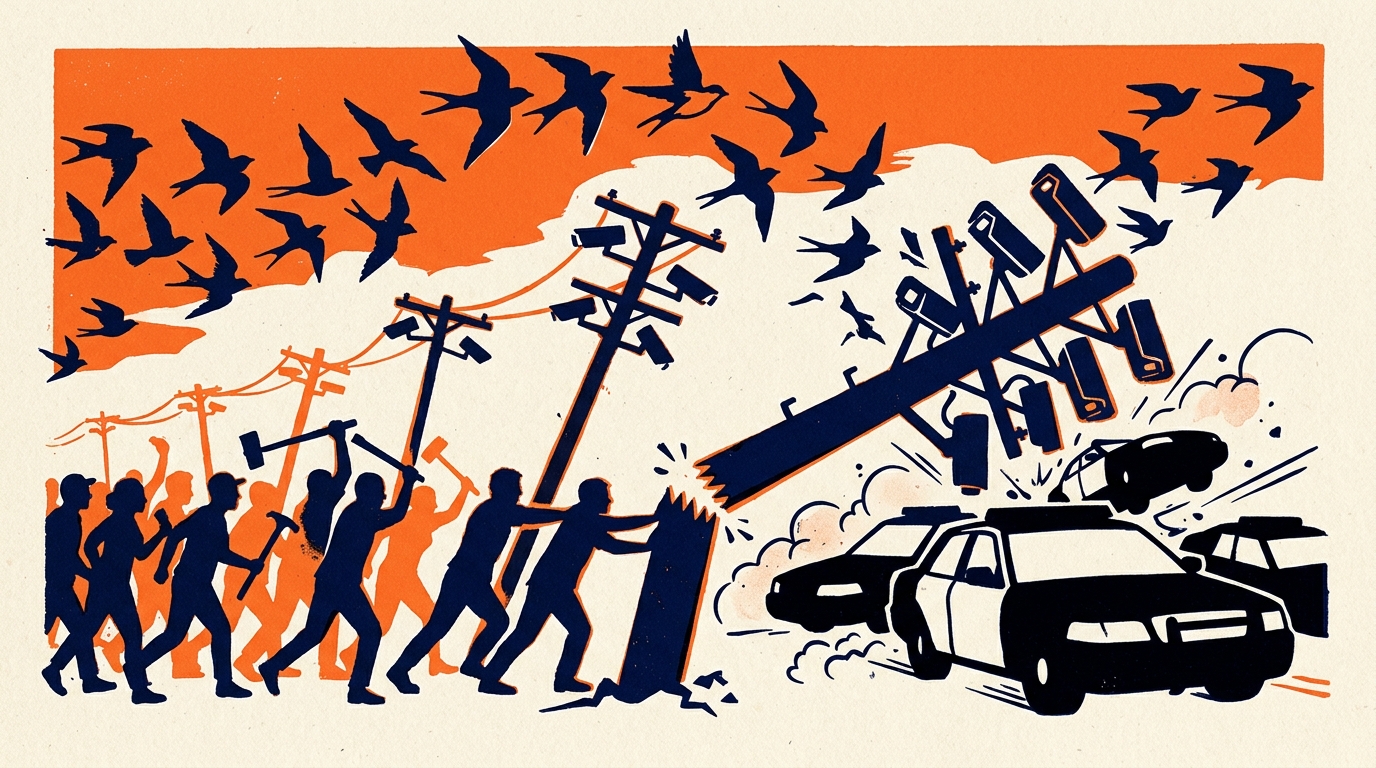
The Los Angeles Police Department has halted its contract with Flock Safety, walking away from 1,500 in-vehicle readers and 160 pole cameras that logged 1.13 billion plate reads last year [NT][NYP]. Just hours earlier in Auburn, California, thieves ripped three automated license plate readers (ALPRs) from their mounts and dumped them into a canal [GR].
This physical revolt is spreading rapidly, with activists and frustrated drivers sawing down camera poles, spray-painting lenses, and planting American flags in the stumps of severed units [HTT][HC]. In Virginia, federal prosecutors are pursuing Air Force engineer Jeffrey Sovern, who faces 13 felony counts for dismantling cameras he argues violate the Fourth Amendment [M].
The backlash is fueled by systemic abuse, including the arrest of ten Georgia officers this month for using the database to stalk ex-partners, and revelations that local police routinely share this data laterally to bypass federal immigration restrictions [CBS][SJ].
By the numbers
"These devices are unconstitutional and a violation of my and others' Fourth Amendment rights." — Jeffrey Sovern, U.S. Air Force engineer [[M](https://www.military.com/air-force-engineer-accused-of-cutting-down-13-police-cameras-says-they-are-unconstitutional)]
The corporate-state surveillance partnership is facing its first major crisis of legitimacy. By selling directly to police chiefs and storing data in private cloud networks, Flock bypassed traditional legislative oversight to build a nationwide tracking grid.
Now, the public is rejecting this warrantless intrusion into daily life. When a private company tracks your movements and local police use that data for personal vendettas, physical resistance and political cancellations become inevitable.
The private company tracking 20 billion American vehicle movements a month is finding out that local police cannot even protect their own spy gear.
What happens next: Expect Flock to aggressively lobby state legislatures for harsher penalties on camera vandalism as more municipal councils weigh the rising political and financial costs of renewing their contracts.
Watchlist
- Schmidt v. Norfolk: The Fourth Circuit's upcoming ruling on warrantless license plate tracking.
- National Week of Action: Coordinated protests targeting private surveillance networks starting August 16.
- The Sovern Trial: The prosecution of an Air Force engineer who dismantled cameras.
More headlines
- The Chatrie Earthquake and the Norfolk LawsuitDue Process
The Supreme Court's 6-3 ruling in Chatrie v. United States, which established that cell-phone location tracking is a Fourth Amendment search, is now destabilizing the defense of Norfolk, Virginia's 175-camera Flock network in Schmidt v. Norfolk.
Crow's Nest If the Fourth Circuit applies Chatrie to license plate readers, the entire business model of warrantless, long-term vehicular tracking will collapse under the weight of the warrant requirement.
- The DEFLOCK Act Model LegislationPrivacy
A new legislative proposal, the DEFLOCK Act, would make it a felony for public officials to deploy automated license plate readers without public hearings and a recorded council vote.
Crow's Nest Forcing local politicians to sign their names to invasive surveillance contracts under pain of felony prosecution is the exact kind of personal accountability needed to halt the unvoted spread of municipal spy networks.
What you can do: Download the DEFLOCK Act model text and send it to your city council representative to demand a formal public hearing on any active or proposed ALPR contracts. - DeFlock Mapping and the August 16 Week of ActionSpeech
The open-source mapping project DeFlock has mapped over 107,600 ALPR cameras nationwide and is organizing a National Week of Action starting August 16, 2026, with activists in 75 cities preparing to protest local surveillance networks.
Crow's Nest Mapping the physical locations of state-sponsored corporate tracking devices is a perfectly legal, highly effective exercise of First Amendment expression that exposes the municipal panopticon.
Take Action
Demand a Public Vote on Local Surveillance
With the LAPD walking away and courts questioning warrantless tracking, now is the perfect time to force your local representatives to justify their surveillance contracts in a public hearing.
When the state deputizes private corporations to watch your every move, it isn't safety—it's inventory management. Keep your eyes on the road, and keep your representatives on a short leash.