The Automated Snitch on Your Weekly Trash Route
That rumbling garbage truck passing your driveway every week isn't just collecting trash anymore. In Cape Coral, Florida, it might soon carry an artificial intelligence eye designed to scan your yard and report you to the city.
The Brief
The Garbage Truck is Snitching on Your Lawn
Source: tiktok.com
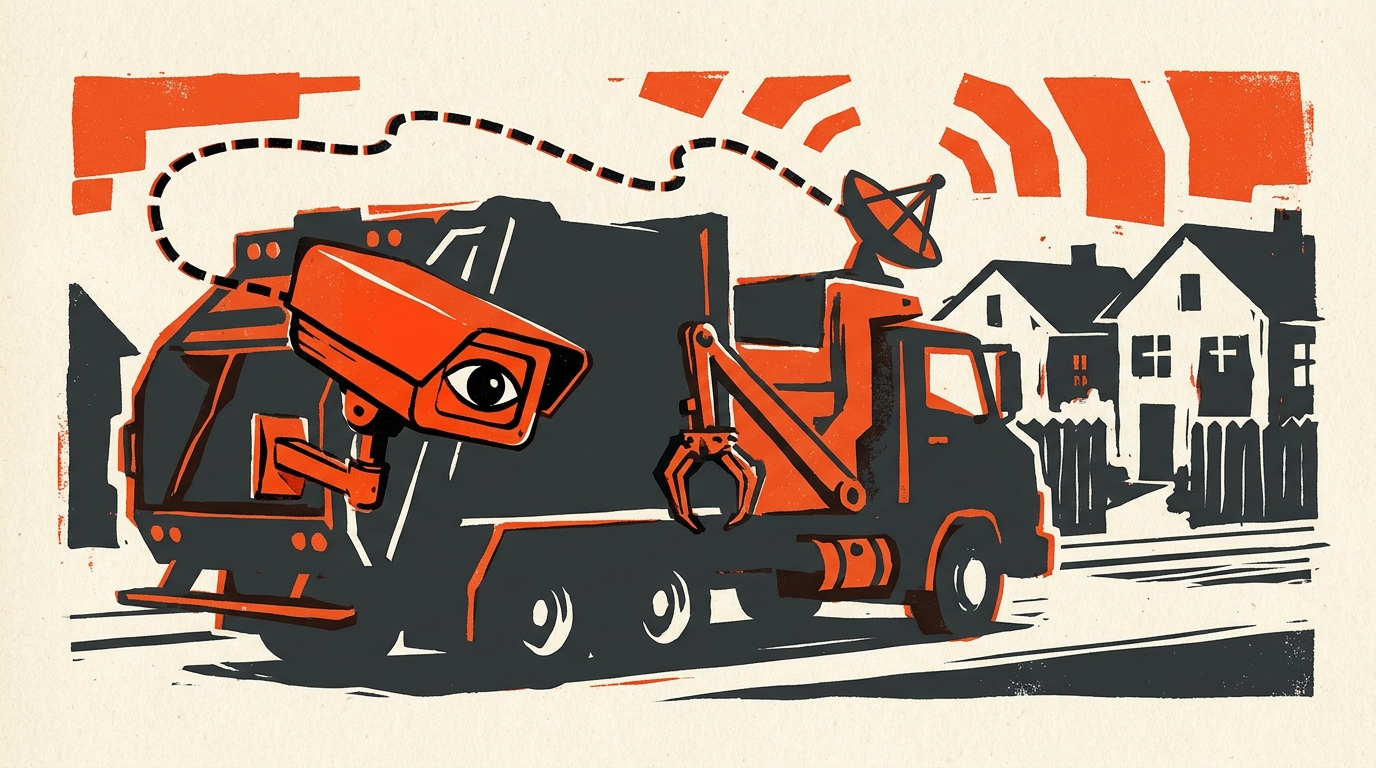
Cape Coral City Manager Michael Ilczyszyn announced on June 24, 2026, that the city is investigating a proposal to turn routine garbage routes into automated property inspections. The system would use computer vision to flag overgrown grass, unpermitted construction, unauthorized vehicles, and fence violations.
This isn't a distant threat; a company called City Detect already markets its PASS AI platform to turn municipal fleets into mobile code-enforcement agents. The company's algorithms have already analyzed over 39,000 parcels in Stockton, California, flagging thousands of "blight" issues.
While Cape Coral officials claim humans will review the AI's referrals before issuing citations, the financial incentives to automate the entire process are immense. Florida municipalities already collected an estimated $66 million in automated citation fines over a single year.
This massive revenue stream has driven a statewide surge in automated enforcement, even as systems like Miami-Dade's school bus cameras face suspensions and relaunches due to erroneous ticketing.
By the numbers
- Cape Coral City Manager Michael Ilczyszyn announced the exploratory proposal on June 24, 2026.
- City Detect's PASS AI platform has already analyzed over 39,000 parcels in Stockton, California.
- Florida municipalities collected an estimated $66 million in automated citation fines in a single year.
- Miami-Dade County relaunched AI cameras on approximately 900 school buses in May 2026.
When local governments outsource enforcement to algorithms, the constitutional presumption of innocence is turned on its head. If trash trucks become rolling surveillance platforms, every home in your neighborhood is subjected to persistent, high-resolution visual logging multiple times a week.
Once this data is collected, federal agencies can use the "data broker loophole" to purchase Americans' location and property data without a warrant, turning a local lawn-mowing dispute into a permanent federal intelligence asset.
Your local government wants to turn the weekly trash run into a warrantless, high-resolution search of your private property.
What happens next: The Cape Coral proposal remains in an exploratory phase, but any move toward a formal Request for Proposals will trigger a public bidding process.
Watchlist
- Cape Coral's upcoming decision on trash-truck-mounted AI cameras.
- The Fourth Circuit's pending ruling on Norfolk's automated cameras.
- Florida's legislative push to curb automated citation schemes.
Bright Spot
Trusting unverified facial recognition algorithms to deprive citizens of their physical liberty is a gross violation of due process that turns police officers into mere button-pushers for private tech vendors.
More headlines
- The $7.5 Billion License Plate Spy in Your NeighborhoodPrivacy
Flock Safety now has roughly 7,000 active cameras across Florida, capturing license plates, Bluetooth, Wi-Fi, and RFID electronic signatures from passing devices.
Crow's Nest Local police departments are acting as unpaid data-collection agents for federal authorities, using Flock's private database to bypass the Fourth Amendment.
What you can do: Join the DeFlock petition movement which has already gathered over 1,000 signatures in Bay County to demand the removal of local ALPR cameras. - Weston Terminates Flock Camera Contract After Resident BacklashGeneral
On June 16, 2026, the town of Weston, Missouri, officially terminated its contract with Flock Safety following a sustained campaign by local residents who objected to automated surveillance.
Crow's Nest Weston proves that municipal surveillance is not inevitable; organized, vocal local opposition can successfully force city officials to tear down automated camera networks.
Take Action
Oppose Cape Coral's Trash Truck AI Surveillance
The proposal is still in its exploratory phase, meaning public feedback can kill the project before the city commits to a private vendor.
Keep your lawn mowed, but keep your eyes on the garbage truck. Until next time, stay free.